Messiah
Messiah
NOTES:
Heiser, Michael S.. The Unseen Realm: Recovering the Supernatural Worldview of the Bible. Lexham Press. Kindle Edition.
T he word translated “messiah” (mashiach) is fairly common in the Old Testament. It occurs over three dozen times. It simply means “anointed.”
N otes on Usage
T he term mashiach in the Hebrew Bible primarily denotes someone anointed with oil for a divine purpose, such as kings (e.g., Saul, David, Solomon) or priests (e.g., Aaron and his successors). It does not inherently carry the later theological connotations of a singular "Messiah" as developed in Second Temple Judaism or Christianity, though David’s line (e.g., Psalm 89:20-38) lays groundwork for such expectations.
T he anointing process typically involves pouring oil on the head (e.g., 1 Samuel 10:1, Exodus 29:7), symbolizing divine selection and empowerment.
I n some cases, the term mashiach is implied through the act of anointing rather than explicitly stated (e.g., Solomon, Joash). I included these figures where the context strongly aligns with the mashiach concept.
N o prophets are explicitly called mashiach in the Hebrew Bible, though Elijah is commanded to anoint Elisha (1 Kings 19:16), but the text does not confirm this anointing or use the term mashiach for Elisha.
T he picture of messiah begins to appear:
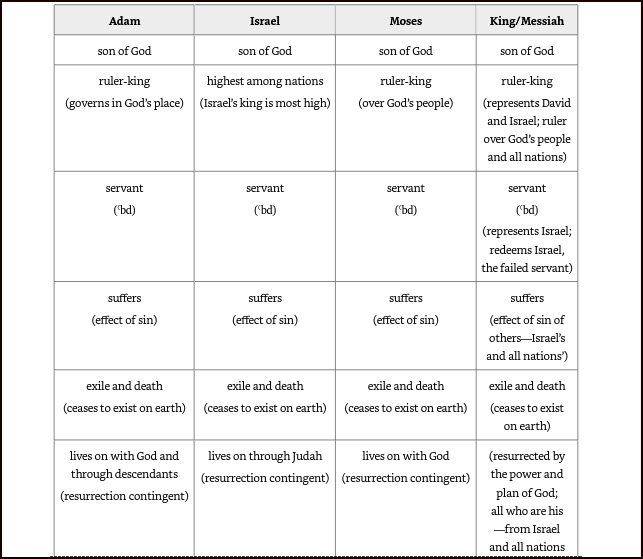

Characters Referred to as Mashiach in the Hebrew Bible
-
Saul
-
Reference: 1 Samuel 9:16, 10:1, 12:3, 12:5, 24:6, 24:10, 26:9, 26:11, 26:16, 26:23; 2 Samuel 1:14, 1:16
-
Context: Saul, the first king of Israel, is anointed by Samuel at God's command. The term mashiach is explicitly used for Saul in several passages, such as 1 Samuel 24:6, where David refers to Saul as "the LORD’s anointed" (יהוה משיחו, YHWH’s mashiach). This highlights Saul’s divinely appointed kingship, despite his later failings.
2. David
- Reference: 1 Samuel 16:6, 16:12-13; 2 Samuel 2:4, 5:3, 19:21, 22:51, 23:1; Psalm 18:50, 89:20, 89:38, 89:51
- Context: David is anointed by Samuel to be king (1 Samuel 16:13) and is frequently called mashiach in the text, such as in 2 Samuel 22:51 ("He shows steadfast love to his anointed, to David and his offspring forever") and Psalm 89:20 ("I have found David, my servant; with my holy oil I have anointed him"). David is a central figure associated with the term, and his line is linked to messianic expectations in later texts.
3. Solomon
- Reference: 1 Kings 1:34, 1:39, 1 Chronicles 29:22
- Context: Solomon is anointed as king (1 Kings 1:39, "Zadok the priest took the horn of oil from the tent and anointed Solomon"). While the term mashiach is not always directly applied in these verses, the act of anointing and the context of kingship imply it, as seen in other royal anointing passages. 1 Chronicles 29:22 explicitly describes Solomon’s anointing as king.
4. Joash (Jehoash)
- Reference: 2 Kings 11:12; 2 Chronicles 23:11
- Context: Joash, a king of Judah, is anointed by Jehoiada the priest during his coronation at a young age (2 Kings 11:12, "Then he brought out the king’s son and put the crown on him and gave him the testimony. And they proclaimed him king and anointed him"). The anointing signifies his role as a divinely appointed king, aligning with the mashiach concept.
5. Hazael
- Reference: 1 Kings 19:15-16
- Context: God instructs Elijah to anoint Hazael as king over Syria (Aram). While the text does not explicitly confirm the anointing took place, the command to anoint him suggests Hazael’s designation as a mashiach in the sense of a divinely appointed ruler, albeit a foreign one.
6. Jehu
- Reference: 1 Kings 19:16; 2 Kings 9:3, 9:6, 9:12
- Context: Jehu is anointed as king over Israel by a prophet sent by Elisha (2 Kings 9:6, "Then he arose and went into the house, and he poured the oil on his head and said to him, ‘Thus says the LORD, the God of Israel, I anoint you king over the people of the LORD, over Israel’"). The term mashiach is implied through the anointing act, marking Jehu as God’s chosen instrument to judge the house of Ahab.
7. Cyrus the Great
- Reference: Isaiah 45:1
- Context: Cyrus, the Persian king, is uniquely called God’s mashiach in Isaiah 45:1: "Thus says the LORD to his anointed, to Cyrus, whose right hand I have grasped, to subdue nations before him." This is a rare instance where a non-Israelite is explicitly called mashiach, reflecting his role in God’s plan to deliver Israel from Babylonian exile.
8. High Priests (Aaron and His Descendants)
- Reference: Leviticus 4:3, 4:5, 4:16, 6:22; Exodus 28:41, 29:7, 30:30
- Context: The high priest is referred to as "the anointed priest" (hakkohen hamashiach, הכהן המשיח) in Leviticus. For example, Leviticus 4:3 mentions "the anointed priest" in the context of sin offerings. Exodus 29:7 describes Aaron’s anointing: "You shall take the anointing oil and pour it on his head and anoint him." The high priestly role, particularly Aaron and his sons, is consistently associated with mashiach due to their anointing for sacred service.
Notes on Usage
- The term mashiach in the Hebrew Bible primarily denotes someone anointed with oil for a divine purpose, such as kings (e.g., Saul, David, Solomon) or priests (e.g., Aaron and his successors). It does not inherently carry the later theological connotations of a singular "Messiah" as developed in Second Temple Judaism or Christianity, though David’s line (e.g., Psalm 89:20-38) lays groundwork for such expectations.
- The anointing process typically involves pouring oil on the head (e.g., 1 Samuel 10:1, Exodus 29:7), symbolizing divine selection and empowerment.
- In some cases, the term mashiach is implied through the act of anointing rather than explicitly stated (e.g., Solomon, Joash). I included these figures where the context strongly aligns with the mashiach concept.
- No prophets are explicitly called mashiach in the Hebrew Bible, though Elijah is commanded to anoint Elisha (1 Kings 19:16), but the text does not confirm this anointing or use the term mashiach for Elisha.
Limitations
- The Hebrew Bible does not use mashiach in a singular, eschatological sense (e.g., a future redeemer figure) as seen in later traditions. Passages like Isaiah 9:6-7 or Micah 5:2 are often interpreted messianically in later contexts but do not explicitly use mashiach.
- Some figures (e.g., other kings of Israel or Judah) may have been anointed but are not explicitly described as such in the text, so they are not included here (e.g., Hezekiah, Josiah).
If you want further details on any specific character or passage, let me know!
12 Mapped Links
↑ Joseph of Jesus
↑ Mary of Jesus
↓ Christ
↓ HaMoshiach
↓ Iamsaves
↓ Messiah
↓ Son of Man
↓ The Son
↓ Yehoshua
↓ ישוע המשיח